TSM's Raven on ALGS Chaos, Catalyst Meta, and Magic: The Gathering Strategy
ALGS Championship skill gap and competitive integrity shine as TSM and coach Raven face unpredictable lobbies and controversial pause rules.
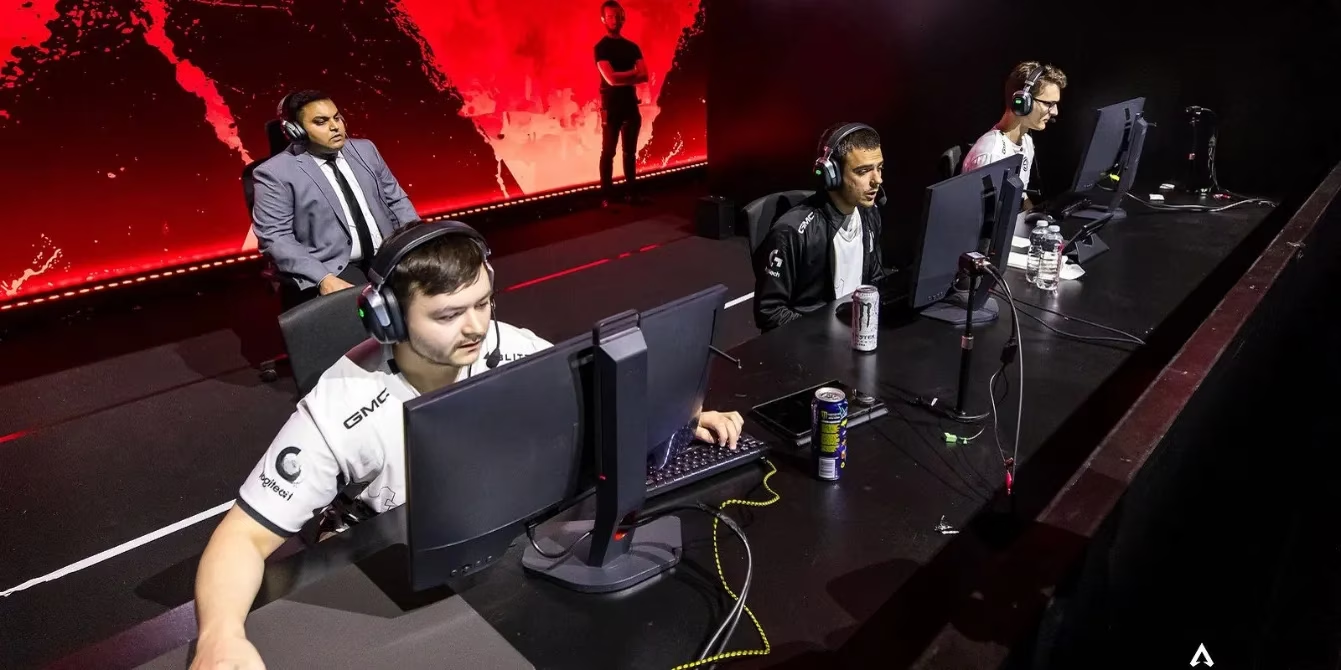
The $2 million ALGS Championship is supposed to be the pinnacle of competitive Apex Legends, but for TSM's coach Raven, the opening days felt less like a grand tournament and more like a chaotic circus. The tournament favorites found themselves in bizarre situations, getting contested by unexpected teams like K1CK and sniped across the map with Charge Rifles during their own fights. Despite a strong start, this carnival atmosphere led to a noticeable drop in intensity for TSM, causing them to slide down to sixth place on Day Two. For a squad expected to dominate from the front, merely securing a spot in the Winner's Bracket felt like an underachievement. Yet, Raven remained unflappable, viewing the issue not as a fundamental strategic failure but as a simple lack of competitive fire—a problem he considered easily fixable before the high-stakes matches began. 😅
The Championship's Skill Disparity Dilemma
Raven pointed out a fascinating quirk of the ALGS Championship format. Despite being the biggest tournament of the year, he believes the skill gap between teams is actually wider than in the regular season Playoffs. Why? The qualification process mixes teams who secured their spots based on last year's form with wildcard squads from the Last Chance Qualifier (LCQ). "Although the concept of an LCQ is pretty cool, it doesn't reflect consistency," Raven mused. This creates lobbies where world-beaters can find themselves alongside scrappy underdogs, leading to unpredictable and sometimes messy matches. In an ideal world, Raven dreams of a global preliminary tournament to decide the final Championship slots, creating a true free-for-all for the last spots instead of relying on regional allocations. He knows this is a costly fantasy, but it highlights his desire for a more consistently competitive field from the first game.
The Great Pause Debate: Strategy vs. Integrity
One of the most contentious issues early in the tournament was the use of tactical pauses. The main broadcast caught several top teams, including Alliance and DarkZero, clearly communicating and planning strategies during these game halts. Raven was firmly on the side of competitive integrity. "If someone crashes, just for competitive integrity’s sake, the game should be paused," he stated, also agreeing with the rule prohibiting team communication during these breaks. He acknowledged that the initial communication of these rules to teams could have been clearer, but also placed some blame on players who might not read the official handbooks. However, Raven did propose one crucial caveat: pauses should be banned from the fifth zone onwards. "It throws off a lot," he explained, referencing a specific instance where a late-game pause for DarkZero dramatically altered the flow of a critical fight, essentially giving every team a free timeout to recalibrate.

Catalyst: The Meta-Defining Menace (and Raven's Brainchild)
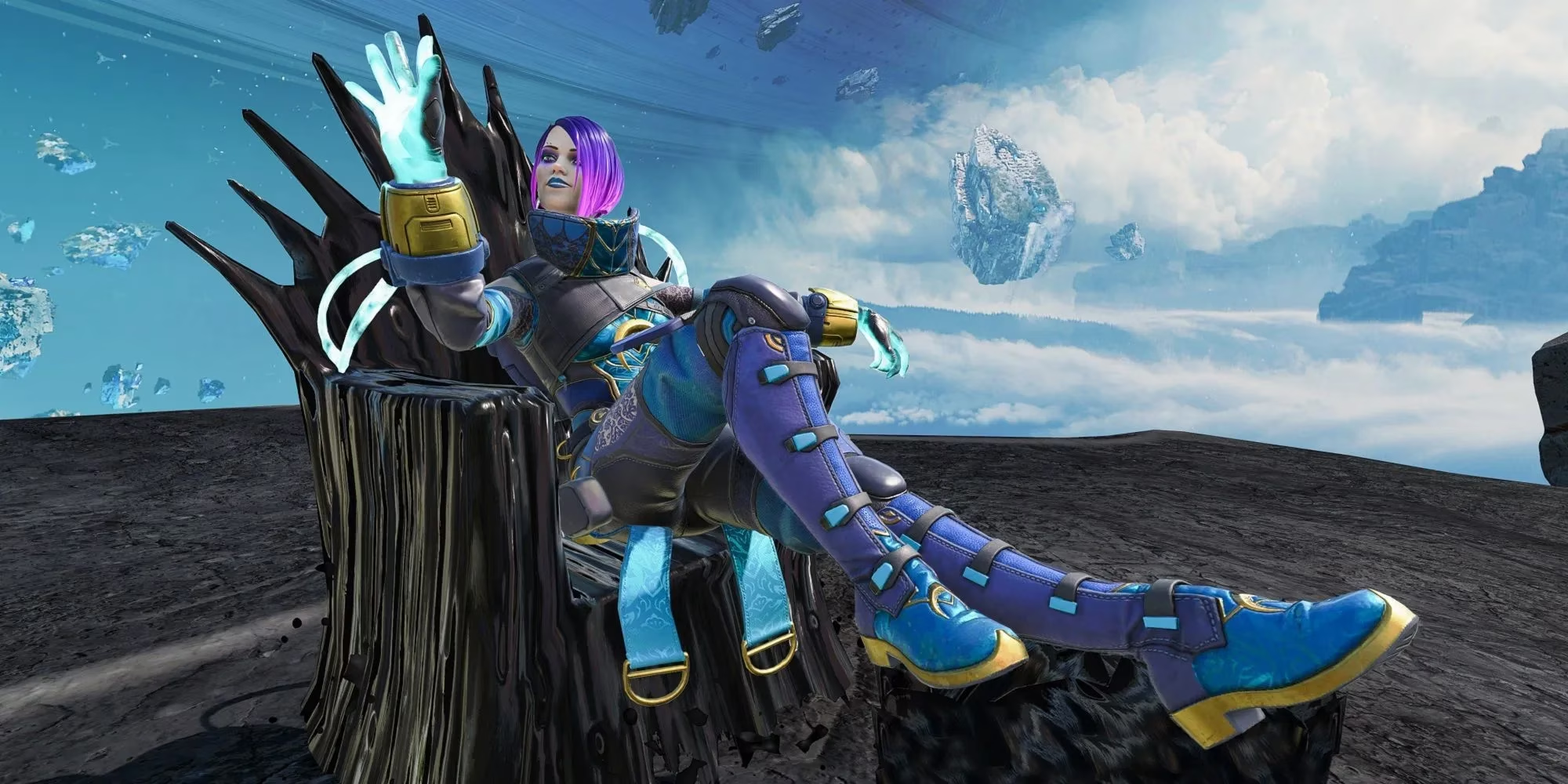
When the conversation turned to the in-game meta, the topic inevitably centered on Catalyst. The terrain-controlling Legend was picked by over 70% of teams in the 2023 group stages, with a staggering 42% of squads running the exact same composition of Bangalore, Catalyst, and Horizon. While the community clamors for nerfs—longer ultimate cooldowns, shorter tactical throws—Raven, the architect of the Catalyst meta, defended his creation with passion. 💪
"She’s one of the best designed characters in any video game ever," he declared. The problem, in his view, isn't that Catalyst is overpowered, but that terrain control is an inherently powerful mechanic in a battle royale, and many other Legends are comparatively weak. "Being able to deny space and control terrain... scales really well as the game goes on. As the map gets smaller, terrain control gets even stronger." He admitted her counters are limited (basically just Horizon and Fuse in specific scenarios) but shifted the blame for a stale viewership experience elsewhere. "Bang is more problematic. She’s too annoying, has too many smokes, and too much time on smokes. It’s really boring to watch." This issue was compounded when the Digital Threat optic was in the crafting rotation, giving Bangalore teams an overwhelming advantage in their own smoke.
From Magic: The Gathering to Apex Legends: The Theory of Inevitability
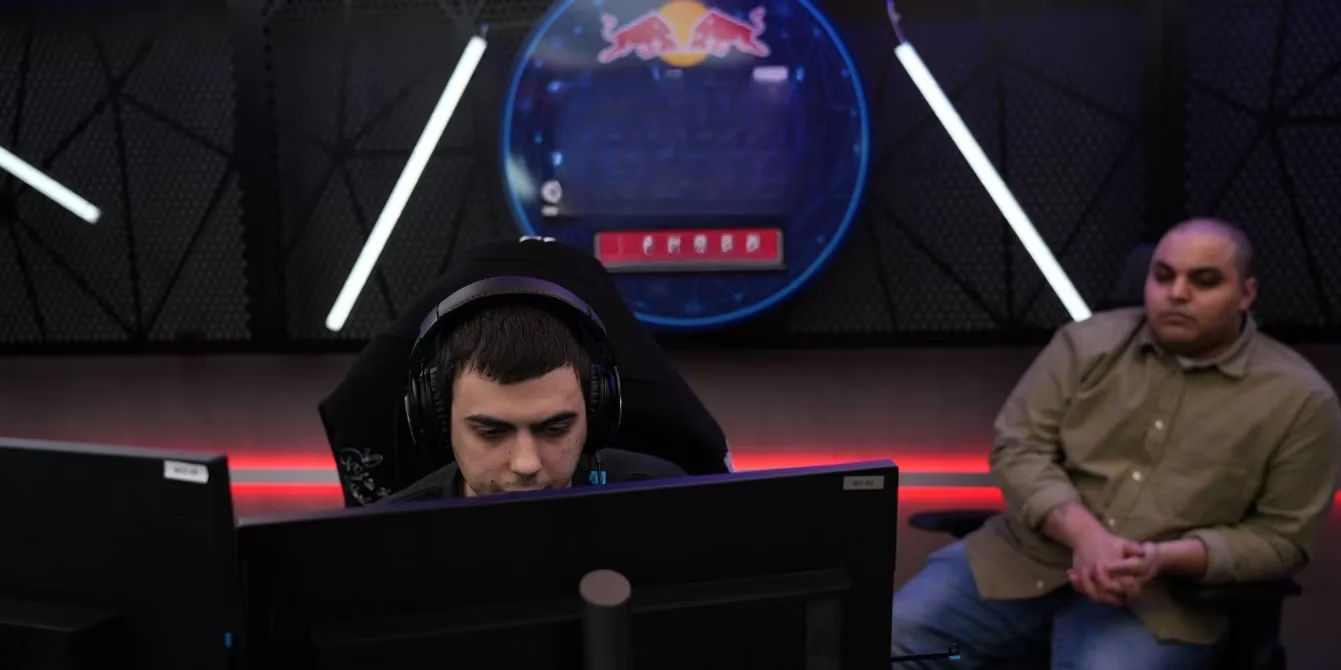
Perhaps the most revealing part of the conversation was Raven's current gaming inspiration. Forget other shooters; the TSM coach has been deep in the strategic depths of Magic: The Gathering. 🃏 He draws direct parallels between the card game's color synergies and team composition synergy in Apex. More importantly, a core Magic concept forms the bedrock of his entire coaching philosophy for TSM: the theory of inevitability.
"The most important concept of Magic is this concept of inevitability: inevitably, if everything stays the same, who wins?" Raven explained. This philosophy pushes TSM toward a zone-oriented, controlling playstyle. The goal is to engineer a game state where, as the match progresses, their victory becomes a foregone conclusion. Characters like Catalyst and Fuse are perfect for this—they can control terrain, warn teams away, and manipulate the lobby to create that "inevitable" winning scenario. This strategic depth, borrowed from a turn-based card game, is what Raven believes sets elite coaching apart in the fast-paced world of battle royale esports.
The Raven Effect: Changing the Game
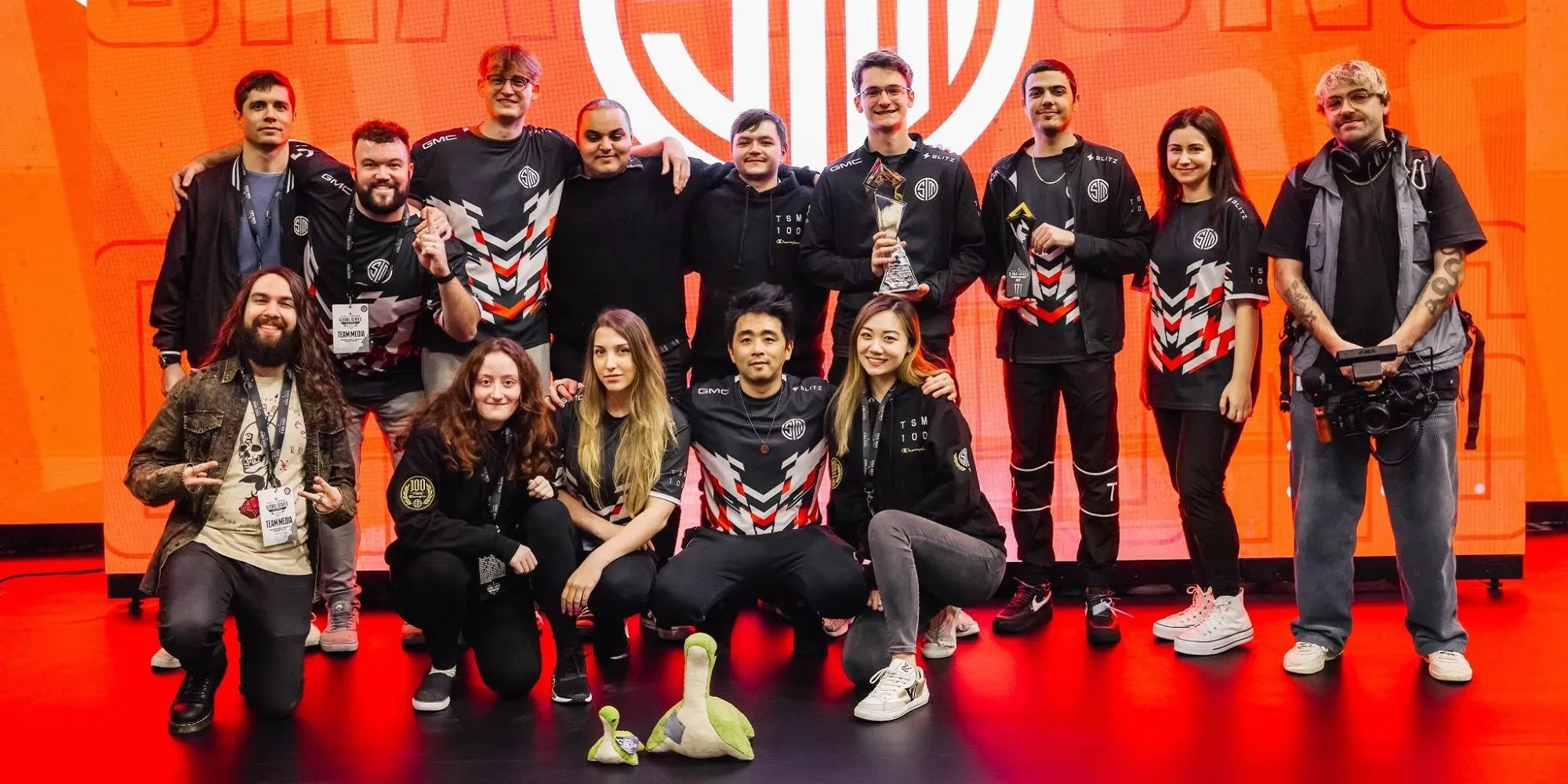
Raven’s journey from niche MMO enthusiast to strategic mastermind behind the world's best Apex team is a testament to his unique approach. He didn't just fill a coaching role; he invented a new dimension for it in Apex Legends esports. His insights—from dissecting tournament formats and pause rules to defending his meta-defining Catalyst picks and applying card game theory to shooter strategy—paint a picture of a coach who views the game through a holistic, almost philosophical lens. As the 2025 ALGS season continues to evolve, one thing is certain: wherever TSM and Raven go, the meta, the strategies, and the very conversation around competitive Apex Legends are sure to follow. 🏆
As detailed in Esports Charts, the ALGS Championship's fluctuating team performances and meta shifts are reflected in real-time viewership and engagement statistics. Esports Charts' data on Apex Legends tournaments highlights how strategic innovations—such as the widespread adoption of Catalyst and zone-control compositions—correlate with spikes in audience interest and competitive unpredictability, underscoring the impact of coaching philosophies like Raven's on the broader esports ecosystem.
Leave a Comment
Comments