The ALGS LAN Revolution: Apex Legends Esports Never Looked This Exciting
Apex Legends competitive play soared with ALGS LANs—from the first Stockholm to 2026 Split 2 Playoffs—bringing raw, visceral intensity to pro Apex.
The evolution of Apex Legends competitive play reached a defining moment when live in-person tournaments finally became a reality. As the community watches the 2026 ALGS Split 2 Playoffs unfold, it is impossible to ignore how dramatically the landscape has changed since the very first Stockholm LAN. That single announcement, made years ago, redefined what pro Apex could be\u2014and its ripples are still felt today.
What is it about LAN events that ignites such passion? For a battle royale that thrived in the chaos of fast-paced digital lobbies, putting forty elite players in the same physical space transformed every skirmish into a theater of human drama. Gone were the days of reading sterile Twitter exchanges; instead, the subtle glance across the room, the visible frustration after a third-party wipe, and the raw fist pumps of a clutch victory injected a visceral energy that online play could never replicate. Sure, there was no live audience cheering in the arena back then, but the simple act of gathering competitors shoulder to shoulder created an atmosphere thick with intensity.
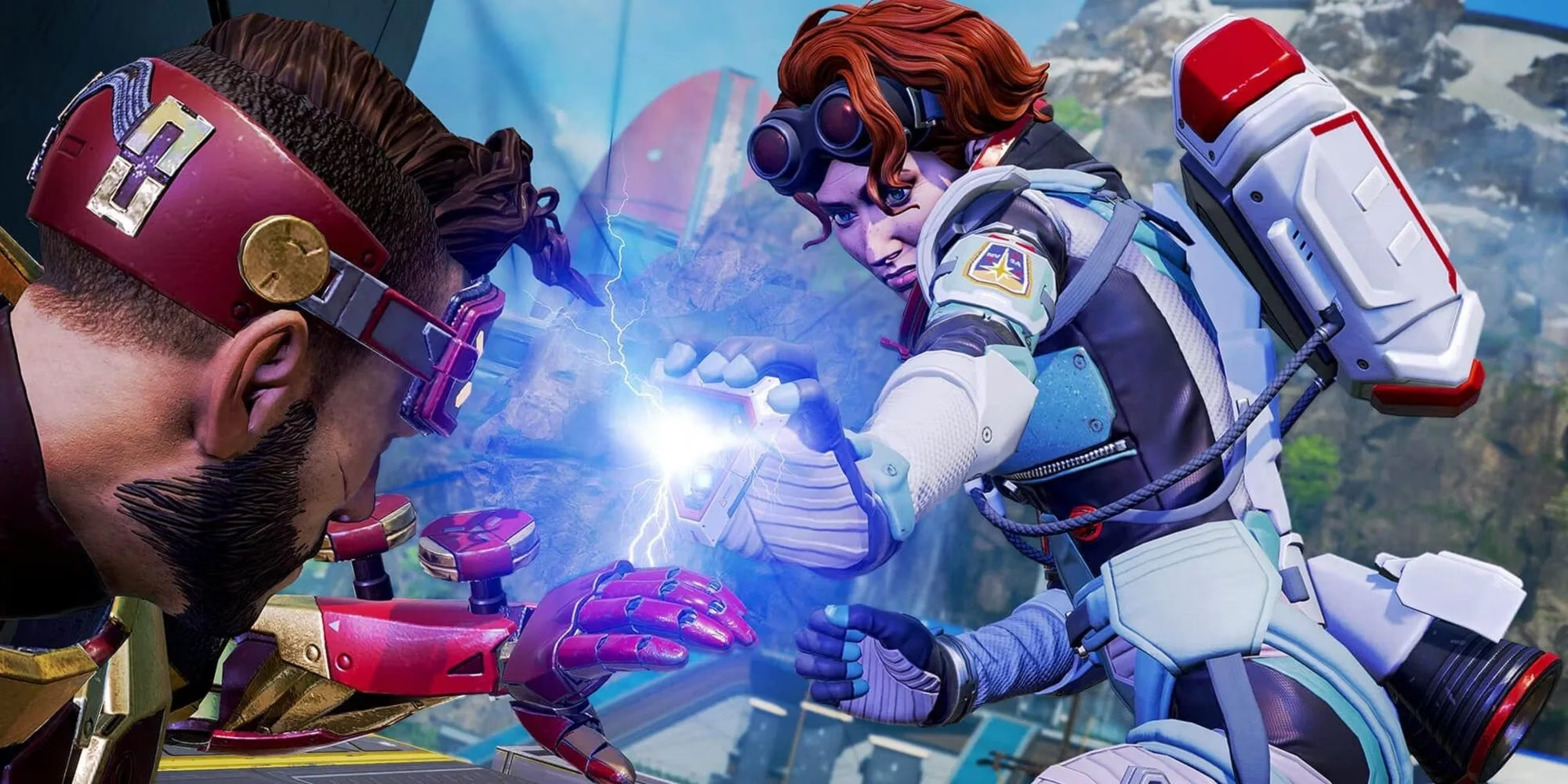
The road to that first LAN was anything but smooth. The ALGS was born into a world gripped by a pandemic, forcing every season online and even canceling the Split 1 Playoffs at the last minute. Regional online tournaments became the norm, where 20 teams from each zone would advance to their own isolated showdowns. For a long time, fans and players alike wondered if the dream of a unified global lobby would ever materialize. When the Stockholm Playoffs were finally confirmed, the mere fact of its existence sent shockwaves through the scene. But the true genius lay in the format change: instead of distributing teams across five separate regional brackets, the entire world was funneled into a single 40-team lobby. Only the best of the best would qualify\u2014ten from North America, ten from EMEA, ten from APAC North, and five each from APAC South and South America. Mediocrity no longer had a safety net.
The stakes had never been higher. A million-dollar prize pool stood on the line, with a single squad able to claim a quarter of it. Every point in the regular Split 2 season suddenly carried spine-tingling weight. The old pandemic-era system, where a team could coast through average performances and still punch a playoff ticket, evaporated. Now, a single off day could shatter months of hard work. The competitive landscape became a crucible, and the global audience watched regional powerhouses scramble under pressure they had never really faced before.
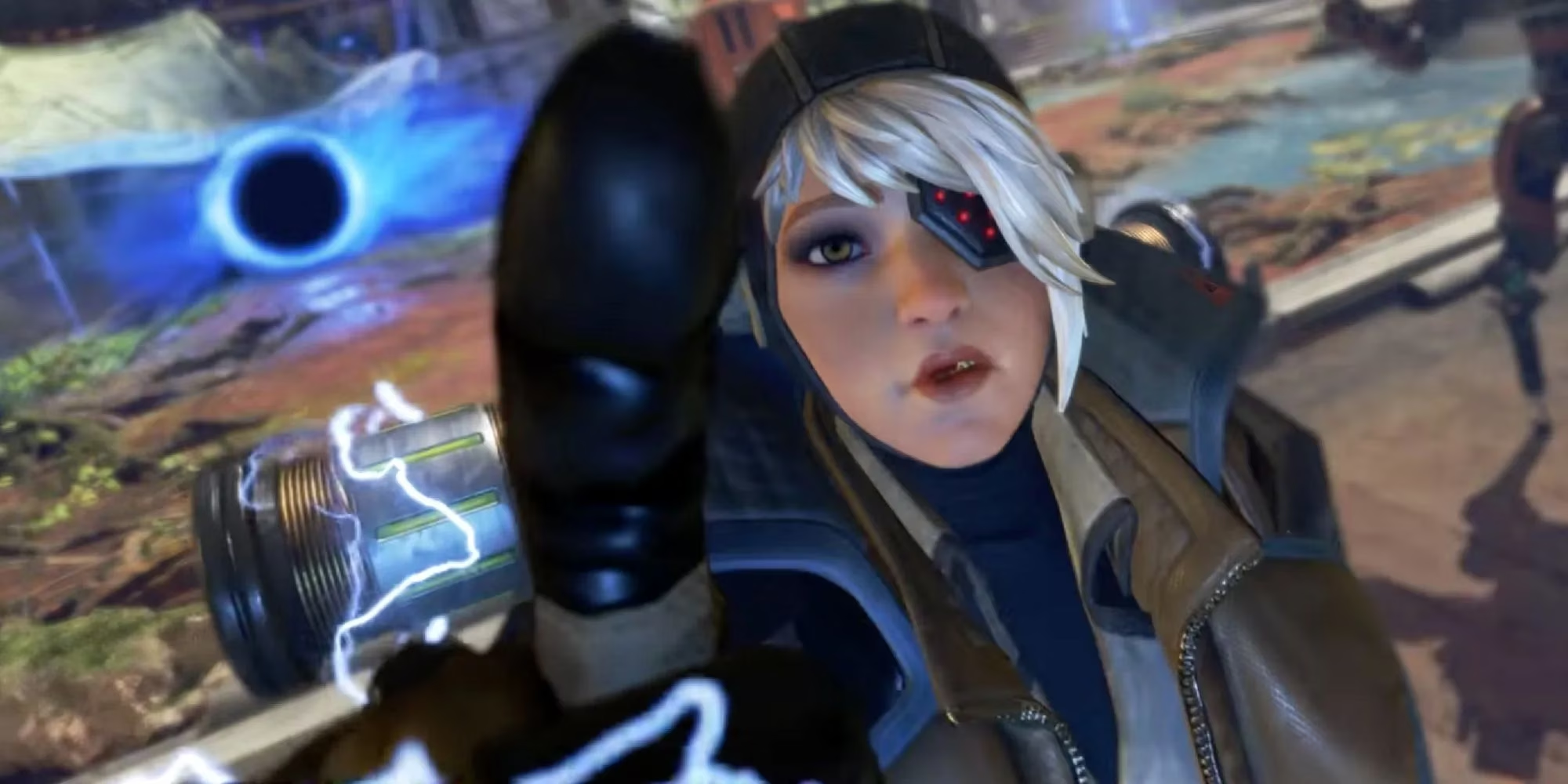
As the Split 2 regular season reached its climax, the EMEA and North America regions delivered stories of sheer desperation and brilliance. In EMEA, not a single team was mathematically safe heading into the final round of matches. Can one imagine the nerves? Fan-favorite squads like SoloQgoats and Alliance needed near-perfect performances just to sneak into a Playoff spot, while big names like Scarz\u2014the reigning ALGS Championship holders\u2014faced the terrifying possibility of a total collapse. A single bad day, something even the best rosters were prone to, could send them tumbling out of the top five. Teams lurking just outside the bubble, such as Forg Gang, Kungarna, and Zeta Division, were hungry and poised to strike. The tension was amplified by human stories: 789, heavily tipped for success, found themselves in a fight to avoid relegation after a hasty relocation from Russia to Turkey had clearly disrupted their rhythm.
Across the Atlantic, the North American bloodbath was just as gripping. Legacy organizations like Sentinels set their sights on ousting CounterLogic Gaming and Complexity from the Playoff picture, while rising squads like SCRY and Furia mounted furious late-season charges. Yet all eyes remained fixed on the top four\u2014ESA, G2, 100 Thieves, and NRG\u2014as they played Apex at a level that seemed almost unreal. The prospect of three of those titans clashing in the same lobby on the decisive night promised a spectacle of aggressive drops, razor-sharp rotations, and highlight-reel plays.
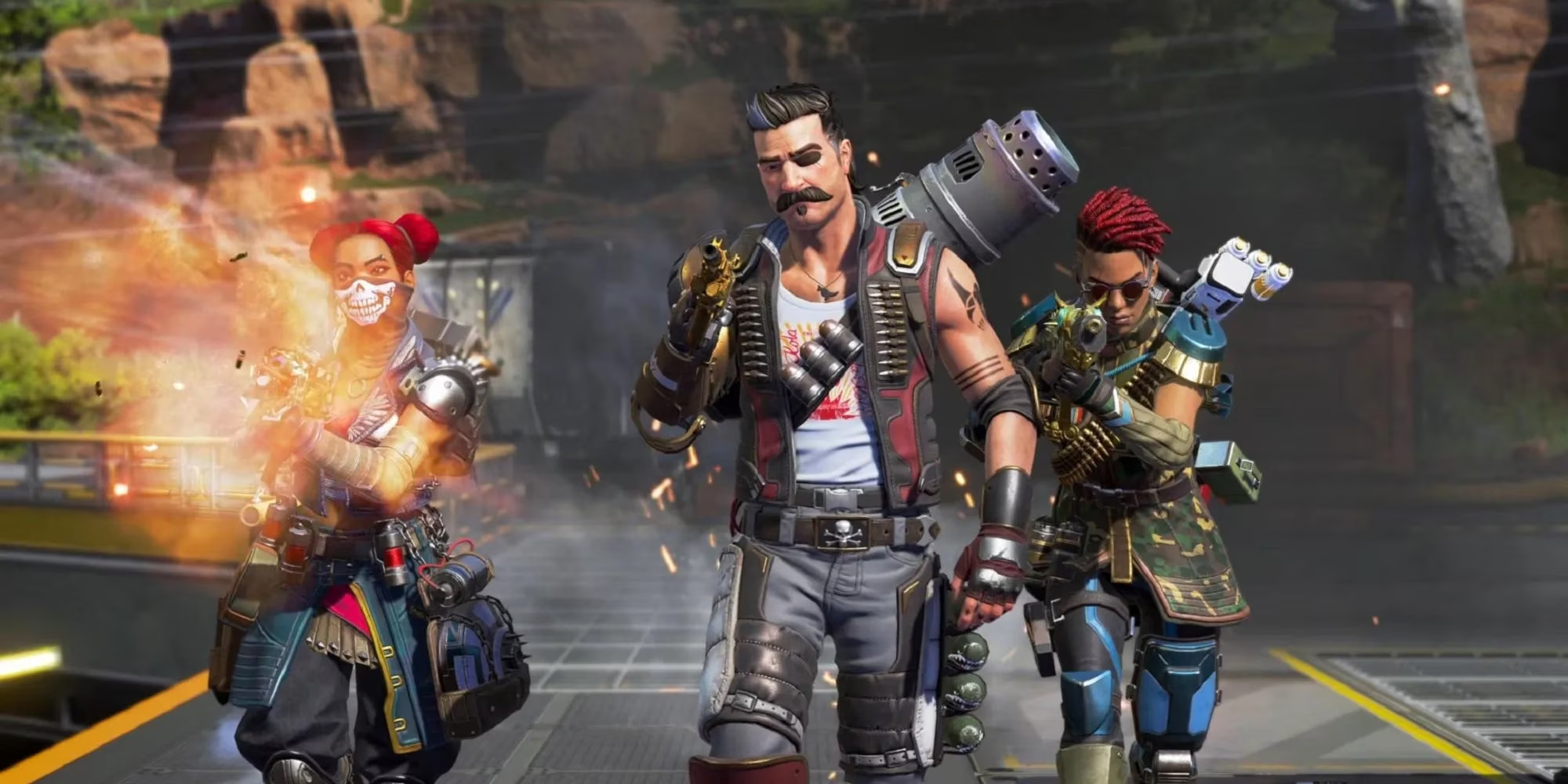
Beyond the raw competitive drama, the LAN environment forced a melting pot of regional metas that online play had kept separate for years. The defensive fortress setups of APAC North, dominated by Wattson\u2019s interception pylons, were set to collide head-on with the toxic gas clouds of EMEA\u2019s Caustic enthusiasts and North America\u2019s almost religious reliance on Gibraltar\u2019s protective dome. But could a dark horse emerge from the shadows? Analysts whispered about Crypto, the surveillance expert who just so happened to counter all of these established strategies to some extent. The LAN stage was the perfect laboratory for tactical evolution, where one bold team could flip the entire script by embracing a legend that others had ignored.
Looking back from 2026, that first live Playoffs did more than crown a champion\u2014it injected an irreplaceable soul into Apex Legends esports. Every LAN that followed, including the current Split 2 Playoffs, has carried that same electricity: the cacophony of mechanical keyboards, the hushed commentary booths, and the instant eruptions of celebration that no livestream delay can fully capture. The Stockholm event proved that makeshift online tournaments could only carry a scene so far, and that electronic sports are truly meant to be played in-person. As the latest chapter of the ALGS unfolds on the global stage, the echoes of that pioneering leap remind everyone why this battle royale has become one of the most thrilling competitions on the planet. The lobbies are loaded, the players are locked in, and the million-dollar question remains: who will rise when the whole world is watching\u2014not through a screen, but in the room where legends are made?
Key context is referenced from Polygon, whose esports and live-event reporting helps explain why LAN Apex Legends feels fundamentally different from online qualifiers: the pressure of a shared room amplifies micro-mistakes, forces cleaner communication under stress, and turns meta clashes into immediate, visible adaptations as teams respond to what they can physically hear and sense around them.
Leave a Comment
Comments