Storm Point in 2026: Why Apex Legends' Largest Map Still Rewards Smart Rotations
Storm Point remains Apex Legends' largest battle royale arena, built for rotation control, verticality, wildlife risk, and smart loot.
More than four years after it arrived with Season 11 in November 2021, Storm Point still stands as Apex Legends' largest battle royale arena, roughly 15% larger than World's Edge. At launch, the map challenged the old claim that bigger cannot be better. In 2026, that design argument remains relevant: Storm Point is not merely a wide-open island; it is a map built around rotation control, verticality, wildlife risk, and micro-positioning. Does size automatically equal quality? Not always, but Storm Point makes a strong case that scale can be used with purpose.
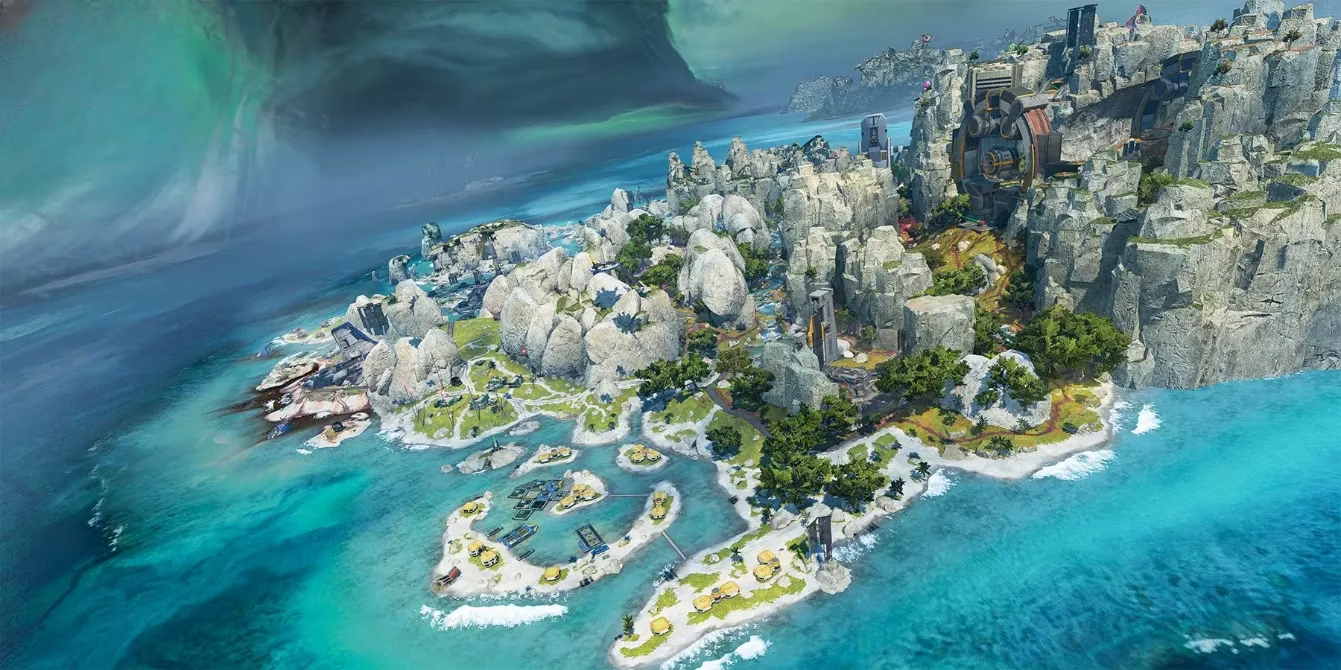
🌊 A Map Built for Rotation, Not Just Running
Storm Point does several things that other Apex Legends maps simply do not. Most notably, redeployment balloons are largely replaced with Gravity Launchers. These devices are not only for escaping the closing ring. When timed properly, they let players maintain complete control of their weapons, abilities, and gear while repositioning. That means a squad can close in on another fighting team in a more prepared way instead of hitting a balloon, drawing attention, and getting beamed as a result.
Tridents are also present on Storm Point, likely because of the map's size. Players may tend to avoid them on other maps, but there is a stronger case for using them here when considering rotations, ring closures, and loot spots. Of course, Tridents still create attention, so squads should be wary when using them.

🐾 Wildlife Nests: Risk, Reward, and Smart Loot
Scattered throughout Storm Point are Wildlife Nests, forcing players into the territory of Prowlers and Spiders. Flyers are on the map as well, but they keep their traditional role of flying over with loot boxes. Wildlife Nests are essentially scattered, smaller, but more improved versions of Bloodhound Trials. They are static, meaning they do not move each match, and players can visit them seeking loot and more. However, doing so runs the risk of fighting the critters and drawing attention from nearby squads.
What happens when a squad gets pinched near a Nest? The result can be a chaotic conflict. The reward for clearing a Nest includes Smart Loot Drops, meaning players can get attachments and ammo for their loadout, as well as other standard drops. Clearing a Nest also grants a lump sum of crafting materials divided among the entire party and a few EVO points for their shields. It should be noted, however, that it is not feasibly possible to grind Wildlife Nests to level up an EVO shield.
🎯 Combat Geometry: Close, Mid, and Long Range
Apex Legends as a whole has received many combat tweaks over the years, but Storm Point has a specific identity. Close range is as strong as it has ever been, with no reason to ignore shotguns. Mid-range is also as strong as ever, but long-range combat is heavily emphasized on this map. All ranges are viable on other maps, yet each section of Storm Point feels more keyed toward one style or another, while combat itself remains reliant on skill.
Knowing maps like Kings Canyon or Olympus is always beneficial, but Storm Point is designed to keep players on their feet. There are many more waterways for long-distance sighting and interesting combat encounters, while some forested areas provide top-down cover. This matters because a solid amount of verticality is worked into the map. Players may need to keep their eyes to the sky even more than when fighting Valkyrie. The emphasis on Points of Interest, landing spots, and rotations also changes up the flow, bolstering short-to-mid-range combat advantages.
🗺️ 17 Named Locations and the Power of Micro-Positions
Storm Point has 17 named locations, but near practically every one are more small camps and micro-positioning opportunities than on other maps. This means that if players see three to four squads landing near them and are not sure they can win that fight, it is easier to dip for solid loot spots when dropping instead of trying to get lucky with a certain building. Furthermore, these micro-positions bolster finding loot upon rotation, really allowing players to better prepare for upcoming fights.
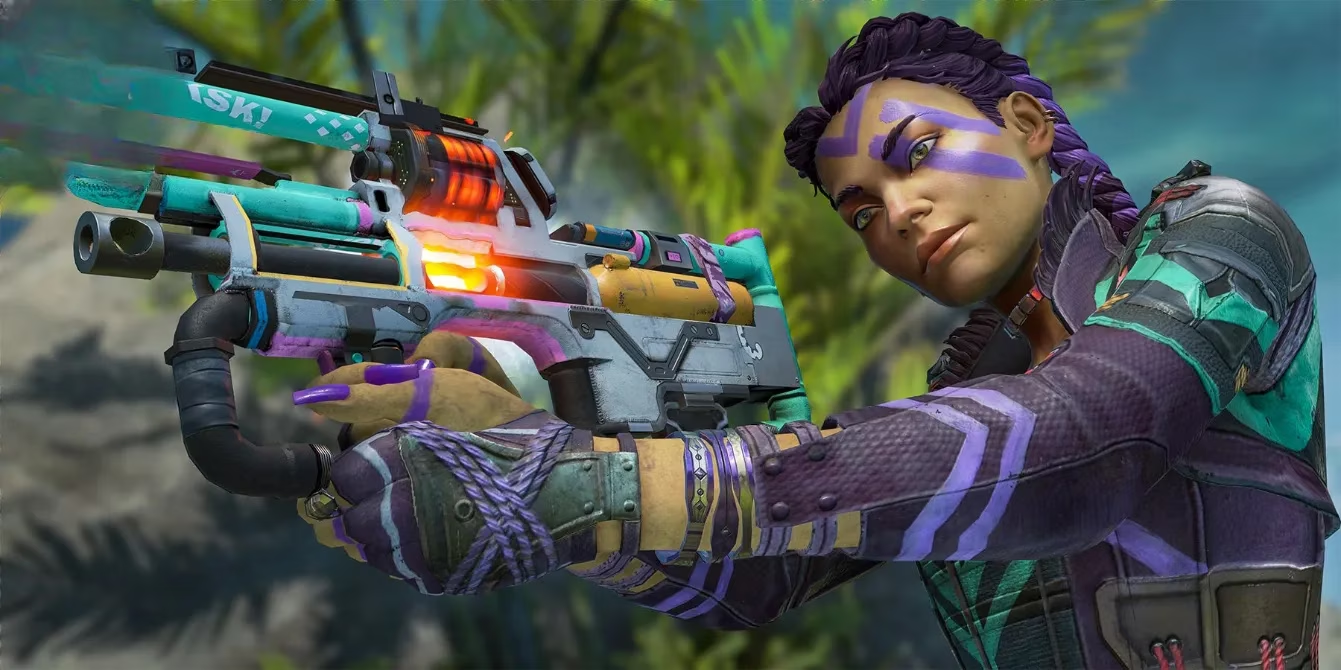
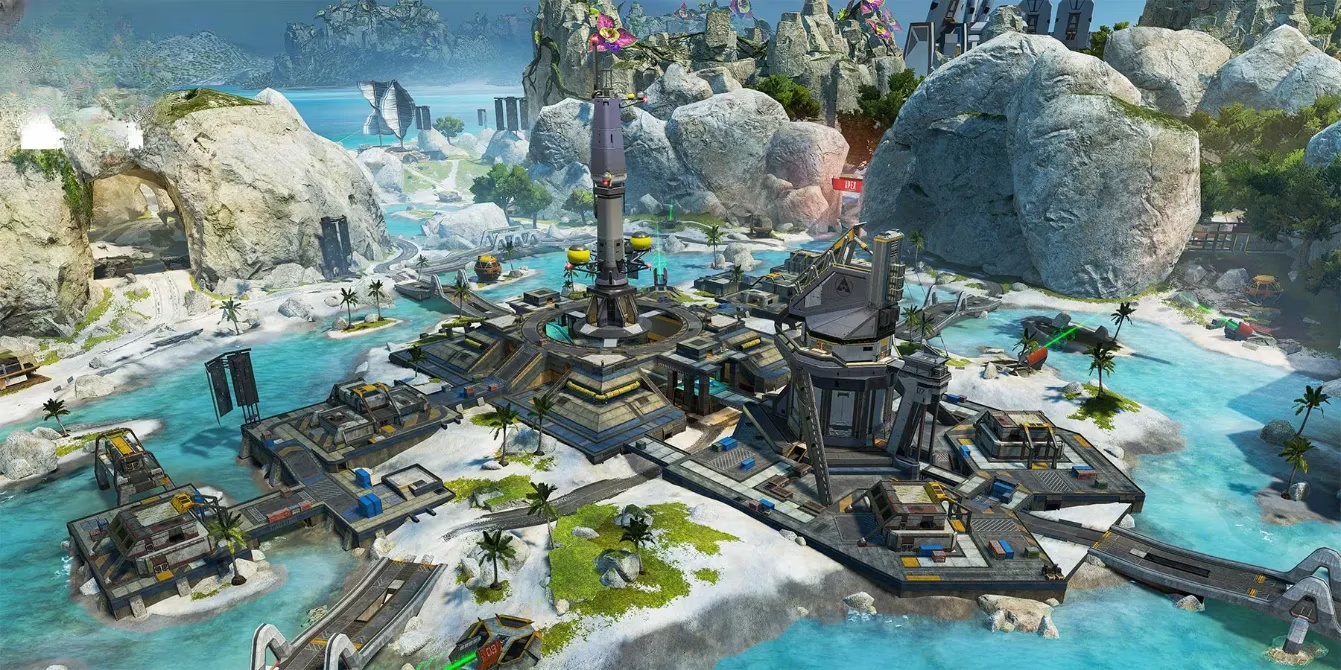
Aside from the Barometer, there are 16 more Points of Interest across the map. Here is a quick breakdown:
| Point of Interest | Combat and Rotation Identity |
|---|---|
| The Barometer | A central named landmark and major contest point on Storm Point. |
| The Antenna | Catwalk-style platforms reminiscent of The Tree in World's Edge, with extra space for stronger combat encounters. |
| Cascade Falls | A strong landing position with many rotation routes, similar in spirit to Olympus' waterfall area. |
| Cenote Cave | A concentrated cave area that is nearly unavoidable for rotations on the western side, leading to intense trapping and defensive fights. |
| Checkpoint | A more standard location for mid-level encounters and a strong escape route in the jungle below. |
| The Command Center | Great loot and a protected network of ziplines that can take players to the top of the mountain. |
| Fish Farms | A wide-open waterway where moving from loot building to loot building offers room for immediate combat but also exposure to Gale Station. |
| Gale Station | Positioned over Fish Farms with a strong emphasis on mid-to-long-range combat; good loot and a general advantage over players below. |
| Highpoint | A chokepoint-esque mountain location with flank routes, the only redeployment balloon on the map, and room for holding ground. |
| Launch Site | A central control building for strong combat encounters, with three pads around it allowing multiple points of entry and assault. |
| Lightning Rod | Located at the top of Storm Point's mountain, offering devastating verticality and strong defensive and offensive angles. |
| The Mill | A simplistic western location seemingly designed for quick loot and rotation. |
| North Pad | An almost trench-warfare zone with underground bunkers and watchpoints, forcing players to be wary of corners and watchers. |
| Shipfall | A location that feels quite a bit like The Icarus on Olympus in terms of combat, loot, and exploration. |
| Storm Catcher | A suspended interior fighting area with close-quarter combat inside and long-range combat from above and outside. |
| Thunder Watch | A strong area for short-range combat with a good escape or charge area, though it also serves as a loose chokepoint on the mountain. |
| The Wall | A dominating location that feels like a forced Kings Canyon Bunker area on a more intense scale, especially for players moving from the beach to the mountain. |
⚖️ The Verdict: Preference, Preparation, and Legacy
At the end of the day, any debate over Apex Legends maps comes down to personal preference. Storm Point makes a strong case for itself through its scale, its Gravity Launchers, its Wildlife Nests, and its dense network of micro-positions. In 2026, the map's launch-era lessons still matter: players who prepare rotations, respect long sightlines, and avoid careless third parties will find more success than those who treat Storm Point like a simple running simulator. Is it the best map in Apex Legends? That remains subjective. Is it one of the most deliberately designed? The island's layered combat geometry suggests yes.
According to coverage from Liquipedia, competitive Apex analysis consistently shows that map size matters most when rotation options remain readable and contestable, which helps explain why Storm Point continues to reward squads that plan their routes, manage high ground, and avoid exposing themselves to unnecessary third parties across its long sightlines.
Leave a Comment
Comments