Olympus Vanishes: Apex Legends Removes Problematic Map from Rotation Amid Player Disruption
Apex Legends' beloved Olympus map vanished in 2026, a stunning disruption to the game's core experience that forced an urgent return to World's Edge, showcasing Respawn's commitment to stability.
In the ever-shifting arena of the Apex Games, the sudden disappearance of Olympus from the map rotation in early 2026 felt like a master magician's trick gone awry—the vibrant stage vanished, leaving only a bewildered silence and a cascade of error messages in its wake. Respawn Entertainment, faced with a digital malady affecting the beloved map, made the decisive call to pull Olympus from all playlists. This move, while disruptive to the planned Season 15 Ranked Split that was to feature the floating city, was a necessary intervention to quarantine the glitch. For players, it meant an abrupt return to the fiery chasms of World's Edge in Ranked mode, a substitution that felt like trading a neon-lit metropolis for a smoldering forge overnight.
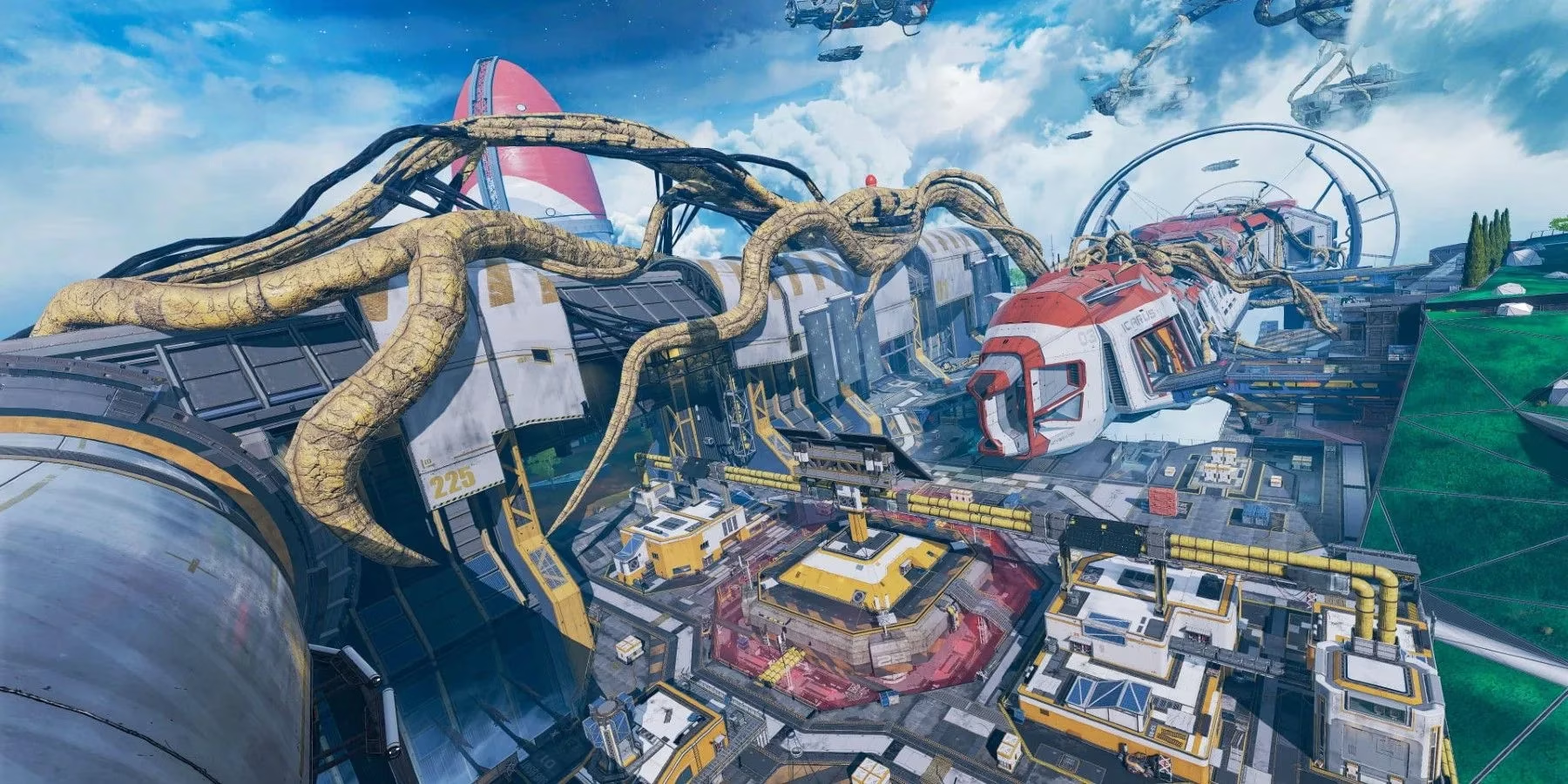
The floating city of Olympus, a marvel of Hammond Robotics engineering first unveiled in Season 7, had long been a cornerstone of the Apex Legends experience. Its departure was not taken lightly. The map was removed from Trios, Duos, and Ranked playlists via a swift playlist update, a surgical extraction meant to allow developers to diagnose and repair the underlying issues without the patient—the live game—suffering further. The contagion even spread to the Control Limited-Time Mode (LTM), where the popular Hammond Labs location was also pulled from rotation, a bitter pill for fans as the mode itself was scheduled for removal shortly thereafter.
Player reaction to this digital quarantine was a complex tapestry of emotions:
-
😞 Disappointment: Many mourned the loss of the map's unique, high-flying combat and its signature Points of Interest (POIs) like the Phase Runner and Bonsai Plaza.
-
👍 Understanding: A significant portion of the community expressed appreciation for Respawn's proactive stance, prioritizing game stability over forced inclusion. The consensus was that a broken map is worse than no map at all.
-
🔥 Nostalgia: Some players welcomed the unexpected, full-time return of World's Edge to the Ranked rotation, reigniting old strategies and rivalries on its familiar, lava-flow terrain.
Respawn's communication was clear but open-ended; no specific timeline was given for Olympus's return. This map crisis unfolded against a backdrop of other major systemic changes in the Apex Arena. In response to long-standing community critiques about matchmaking fairness, the developers had just rolled out a comprehensive overhaul of the ranked system. This new framework introduced more granular "skill buckets," aiming to create more balanced and equitable team compositions—a change as delicate and complex as recalibrating a chronometer in the heart of a storm. The temporary loss of Olympus became an unintended stress test for these new systems on the remaining battlegrounds.
For a game that thrives on variety and predictable chaos, the absence of Olympus left a distinct void. Its bright, utopian visuals and close-quarter combat zones offered a pace and aesthetic distinct from the grittier Kings Canyon or the sprawling Storm Point. Its removal was a reminder of the fragile architecture underpinning even the most polished live-service worlds—a single corrupted line of code could cause a gleaming city to blink out of existence, as ephemeral as a soap bubble bursting in the wind.
The Broader Impact & Looking Forward
The Olympus incident of 2026 highlighted several key aspects of modern game stewardship:
| Aspect | Implication |
|---|---|
| Live Service Agility | The ability to quickly remove and repair content is crucial for player trust. |
| Community Communication | Transparent, if not always detailed, updates help manage player expectations. |
| Content Interdependence | A bug on one map (Olympus) can affect ancillary modes (Control LTM). |
As the developers worked behind the scenes, the Apex Games continued on other fronts. The arsenal was ever-evolving, new legends were being whispered about in the shadows, and the narrative of the Outlands pressed forward. Yet, the question lingered in the dropship: when would the players once again touch down on the gleaming platforms of Olympus? Its eventual return would not just be a technical fix, but a restoration of a piece of the game's soul—a return to a familiar skyline that had become as much a home to legends as the weapons in their hands. For now, the fight continued elsewhere, with the community watching, waiting, and adapting, proving that the true arena is not just the map, but the spirit of the competitors who traverse it.
Leave a Comment
Comments