Echoes of the Arena: A Player’s Reflection on ALGS’s Return to LAN
Apex Legends esports and ALGS banners unite global fans, reigniting passion as APAC South rises to dominance in thrilling LAN events.
I still recall the silence before the storm – those 950-odd days when the only roar we heard was the hum of our monitors, the only stage a bedroom lit by the cold glow of a screen. How could a game so vivid, so loud in spirit, be confined to whispers online? But then, like a phoenix blinking back into the sun, Apex Legends esports came home to LAN, and I was there – in heart, in the stands of Raleigh, in the pixels of every stream – watching history unfold.
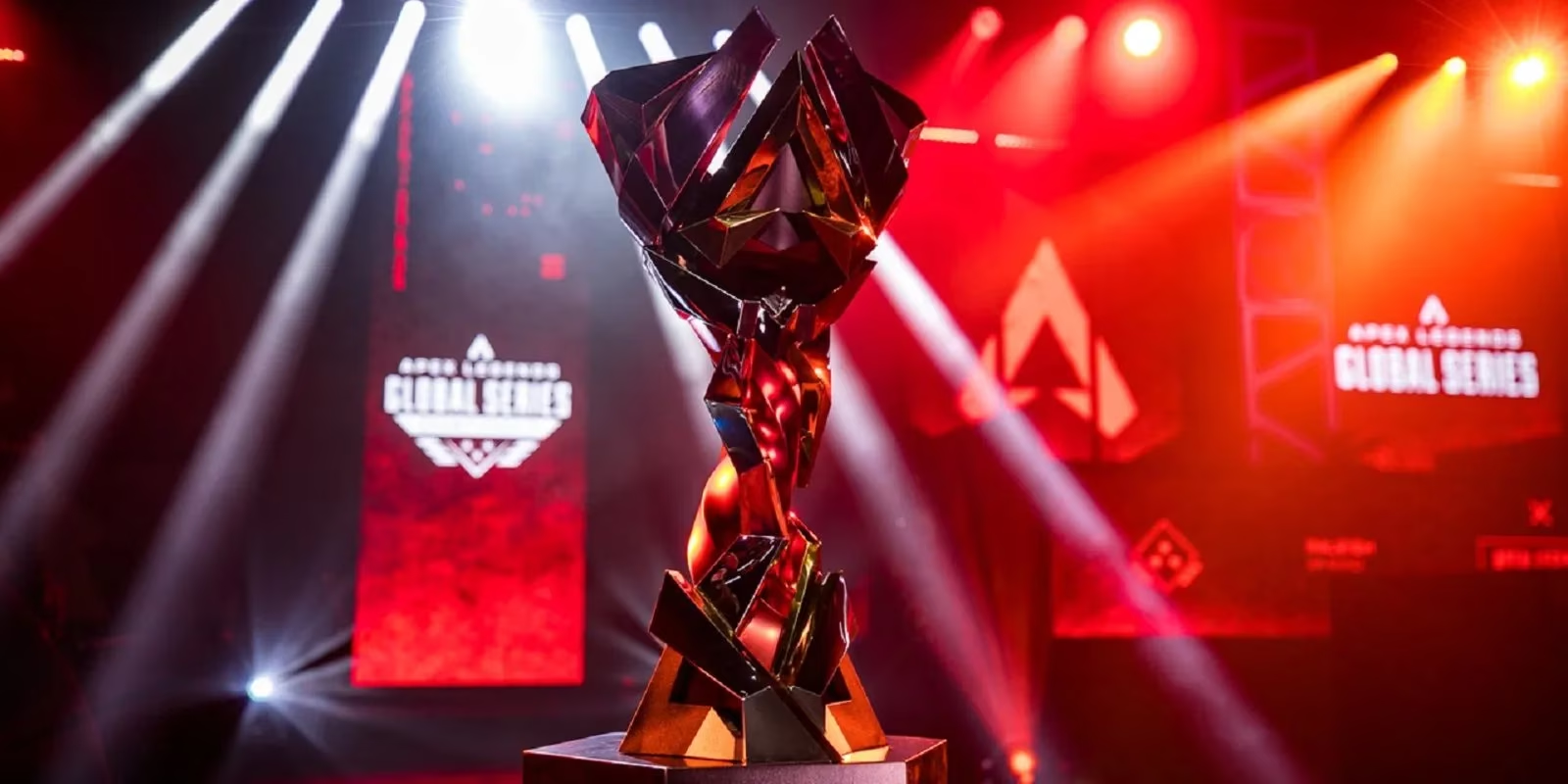
The Return to Thunderous Applause
Stockholm was first – a sterile hall that somehow felt warmer than any virtual lobby ever could. I watched the finals with 539,000 others, all of us holding our breath as Reignite, a name then foreign to many, carved their legend. The APAC South faithful erupted, their joy a seismic ripple felt across oceans. For me, it wasn’t just a victory; it was a signal that the world was waking up again. Yet, Stockholm was only the prologue. Raleigh brought the true crescendo: four days of electricity, the hum of a live crowd, strangers clutching banners, the ground trembling as DarkZero – the same Aussie souls, rebranded – hoisted the championship trophy. We had a dynasty in the making, and I felt it in my bones.
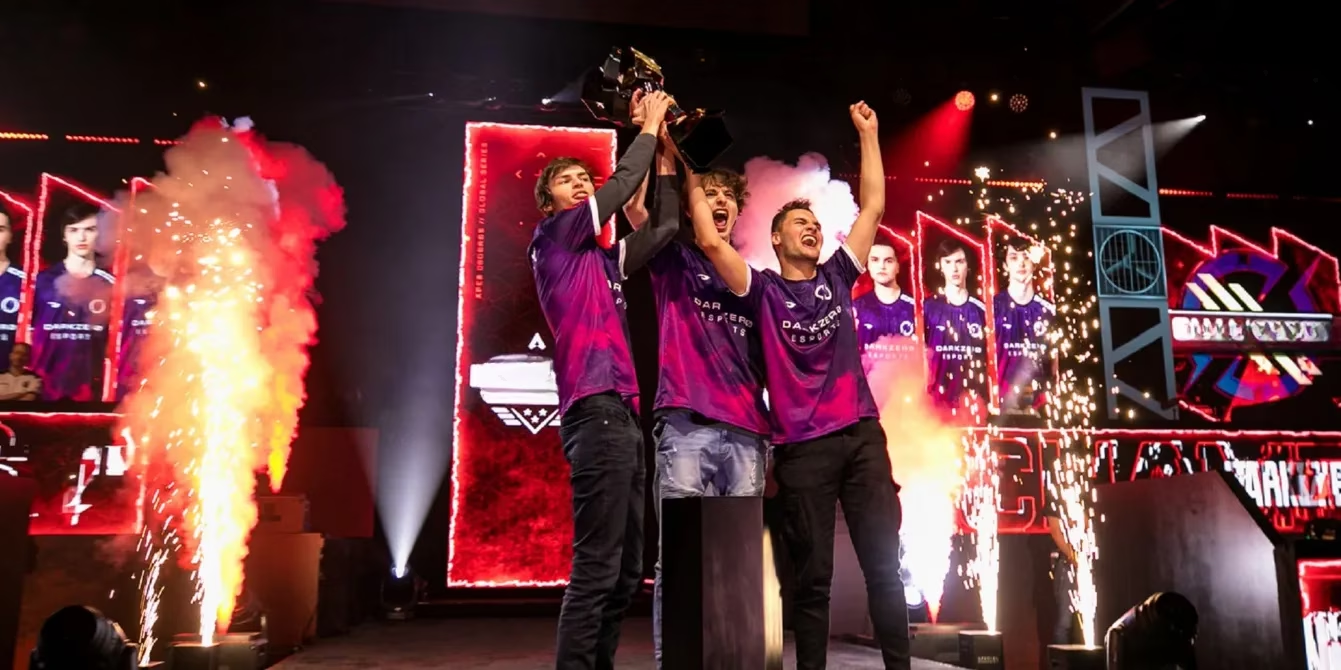
When APAC South Roared
Can a single region’s dominance rewrite the rules of invitation? That was the question burning in my mind after DarkZero’s repeat. The ALGS commissioner, John Nelson, later shared that they had long planned to let competition dictate regional slots. The Split 1 playoffs, still trapped online, couldn’t trigger that shift, but the results in Sweden and Raleigh spoke louder than any algorithm. I saw the holistic re-evaluation: not just the champions, but the depth of APAC South, from top to bottom. It felt like justice – the game’s meta, once dominated by NA and EMEA narratives, now had a southern star burning bright. And as an observer, I couldn’t help but marvel at how esports, in its purest form, levels all borders.
Tokens of Fandom
Remember the crowd-funded prize pool for Year 1? That communal swelling of contribution? For the Championship, we got something quieter but perhaps more intimate: team banners in the in-game store. I bought all ten. I still have them equipped on my mains – one for every legend, a patchwork of allegiances. Nelson called it an integration that let me be a fan regardless of who I played. Each team received a share of the sales, and in that small transaction, I felt woven into the very fabric of the competition. Was it less grandiose than a rising prize pool? Maybe. But it was ours, a digital badge of belonging.
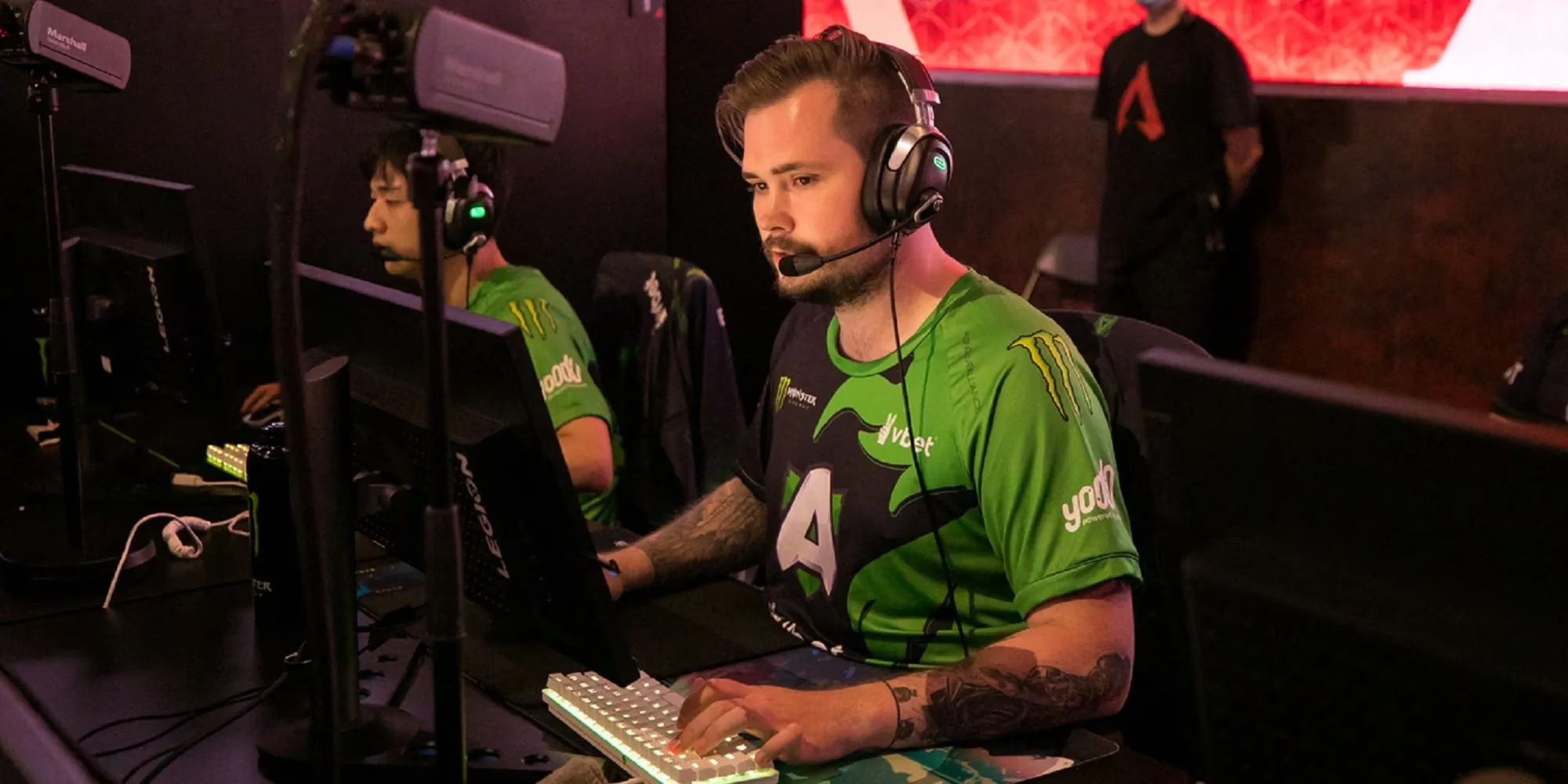
The Shadow of the Pandemic
Yet no celebration is without its scars. Roughly a quarter of teams in Raleigh played with substitutes, some forced into duos after their backups also tested positive. The ALGS’s strict COVID-19 protocols, designed to safeguard health and competition integrity, became a crucible. I wondered: did the sight of a squad fighting shorthanded not undermine the very integrity they sought to protect? Nelson argued that allowing an extra substitute for live events was a safeguard, but the reality was stark – only one team with a substitute reached finals day. I recall the stories of GMT scrimmaging in a Walmart, a symbol of the fragmented preparation that left players scrambling. The contrast with other esports offering dedicated isolation play areas was sharp, and it made me ask: could we have done more to shield the spirit of fair contest while still shielding bodies?
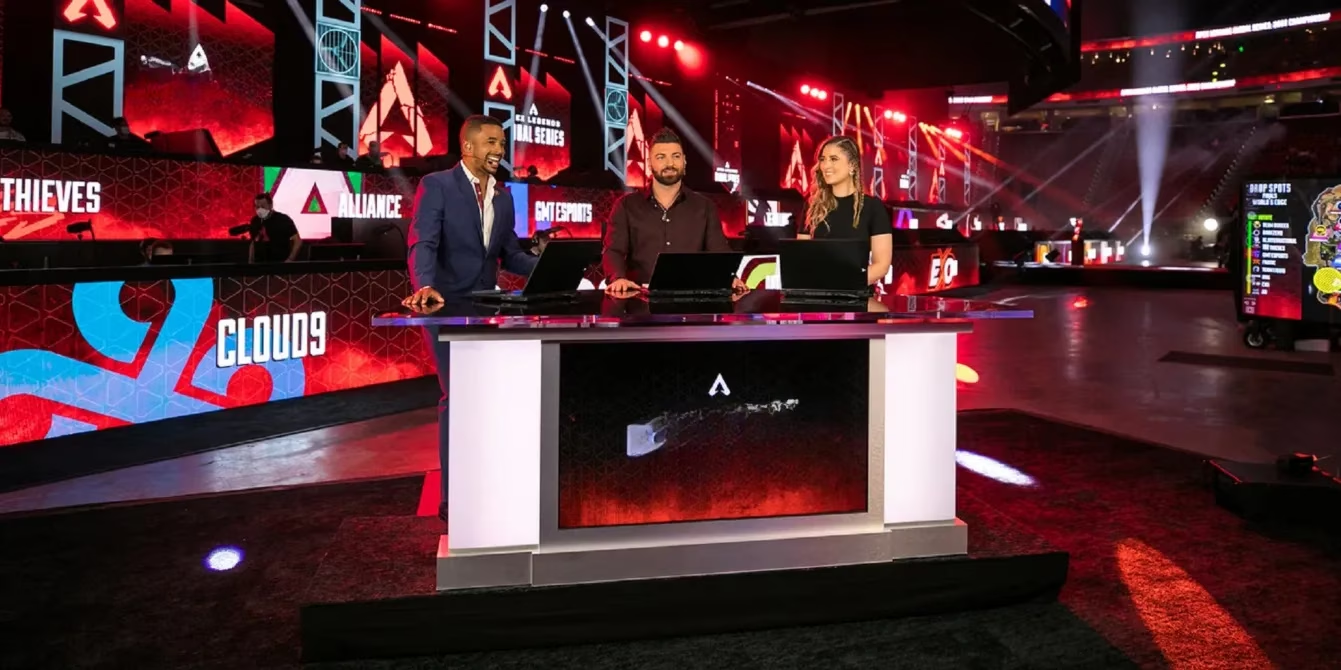
Visa Woes and a Glimmer of Hope
Then there were the visas. The agony of entire teams – even those from Britain – watching their American dream dissolve in bureaucratic limbo. Nelson spoke of tireless work with governments, but sometimes the decision rested with forces beyond any organizer’s reach. As a fan, it stung to wonder what could have been if the dates had been announced sooner, if the world had been a little kinder. Yet, in that struggle, I witnessed a stubborn resilience. Players fought paperwork like they fought on the drop ship, and the fact that Raleigh happened at all was a triumph.
Lessons Etched in Time
Now, in 2026, I look back on Year 2 not as a distant memory but as a foundation. Nelson’s biggest takeaway was the return to LAN – the validation, the screaming arena, the highlight of careers. For me, it was the proof that our community can weather any storm. The regional slot recalibration we see today, the improved contingency plans for health crises, the deeper integration of esports into the game’s daily life – all were born from that turbulent season. I still wear my DarkZero banner with pride, and every time I hear a live crowd roar through my headset, I remember the silence we broke. The arena echoes on, louder than ever.
Leave a Comment
Comments